15 Screen-Free Group Games for Kids' Parties and Playdates
A running order for a room full of excited children: two warm-ups, three big games, and something quiet before the cake.
Kids & Parenting Hub Editorial Team
Published 30 Jul 2026 · Updated 16 Aug 2026 · 8 min read · Ages 4-11 years
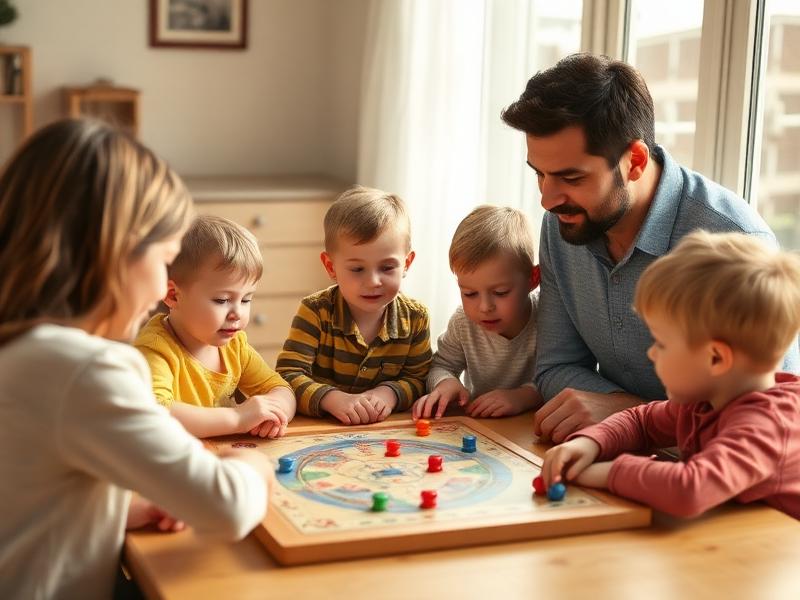
A group of children with nothing to do will invent something, and it is a coin flip whether that something is charming or a disaster. A short list of games you can start instantly is the single most useful thing an adult can bring to a party.
These fifteen need no equipment beyond what is already in the room, and they are arranged as a running order rather than a menu.
Three warm-ups to start in ten seconds
Start with something everybody can join late, because children arrive at different times and nobody should have to wait to be included.
- Copycat circle: one child leads a movement, everyone copies.
- Name and action: say your name with a gesture, the group repeats it.
- Freeze dance with a phone playing music and one adult on pause duty.
Six big games for the middle of the party
The middle is for the loud games — the ones with running, hiding and shrieking. Keep each round short and stop while it is still popular.
- Sardines: one child hides, everyone who finds them hides too.
- Wink murder for older children who can keep a straight face.
- Traffic lights with silly extra commands.
- Balloon keepy-uppy: the group must keep it off the floor.
- Treasure hunt with five clues written on paper.
- Human knot for eight to ten-year-olds.
Three thinking games for a table
Table games are the recovery period between two loud games, and they are the ones shy children usually enjoy most.
- Twenty questions with an object hidden in a bag.
- Word chains where each word starts with the last letter of the previous one.
- Kim's game: a tray of objects, thirty seconds to look, one item removed.
Three calm-down games before food or home time
Ending a party at full volume makes the last twenty minutes hard for everyone. Plan the wind-down deliberately.
- Sleeping lions: last one to move wins.
- Pass the whisper around a circle.
- Story circle: each child adds one sentence.
How to run games with a big group
Explain in under thirty seconds, demonstrate rather than describe, and start before everyone has fully understood — the rest is learned by playing. Avoid elimination games where the first child out has to sit for ten minutes; adapt them so 'out' children get a job instead.
- Never leave a child sitting out for more than a minute.
- Give the shyest child a role: timekeeper, judge, music controller.
- Stop each game one round before interest runs out.
- Keep two spare games in your pocket for the gap before food.
Activity details
- Recommended age
- 4-11 years
- Participants
- 5-20 children
- Preparation time
- 10 minutes
- Activity duration
- 60-90 minutes
- Difficulty
- Easy
Materials needed
- A clear space with soft furnishings moved back
- Music from any phone or speaker
- Paper and pen for treasure hunt clues
- One balloon (supervised)
Step-by-step instructions
- Clear the space and agree the boundaries with the children out loud.
- Open with a warm-up that latecomers can join instantly.
- Run two or three high-energy games, each for a short round.
- Break with a table game or a treasure hunt.
- Close with a calm-down game before food or pick-up.
Safety notes
- Clear hard-edged furniture from running games and check the floor surface.
- Balloons are a choking hazard for young children — supervise closely and remove burst pieces immediately.
- Check allergies before any food-based game or prize.
- Keep an adult count of children whenever a game involves hiding.
Learning benefits
- Cooperation, listening and rule-following
- Physical activity and coordination
- Confidence in speaking and leading
- Inclusion practice for mixed friendship groups
Alternative versions
- Run the whole list outdoors in summer with a wide-game version of sardines.
- Turn the treasure hunt into a team relay for larger groups.
- Add a themed twist (pirates, space) to link the games together.
Key takeaways
- Plan a running order — warm-up, loud, table, calm — not a list of games.
- Explain in thirty seconds and demonstrate rather than describe.
- Avoid long elimination waits; give 'out' children a job.
- Stop each game one round before the interest runs out.
Frequently asked questions
How many games do I need for a two-hour party?
Six to eight, plus two spares. Games run shorter than you expect, and food and cake take about a third of the time.
What about children who do not want to join in?
Offer a role rather than pressure — scorekeeper, music, judge. Most children join once they have been part of the game from the edge for a few minutes.
Do prizes help?
Small, universal ones do. Single winner-takes-all prizes usually create more upset than energy in this age range.
Conclusion
A party runs on pacing, not on props. Keep a running order in your pocket, keep every child moving between roles, and finish quietly.
Write your running order on one card and keep it in your pocket on the day.
Keep reading on the Hub
- Family Board Games That Teach Turn-Taking (Ages 4-10)
- 20 Outdoor Activities for Kids You Can Run in the Garden
- Building Confidence and Independence Through Everyday Jobs
References and further reading
- U.S. Consumer Product Safety Commission — balloon safety guidance
- NAEYC — supporting cooperative play
This article is general educational content about play, learning and family life. It does not diagnose medical, psychological or developmental conditions and is not a substitute for advice from a qualified professional. If you have concerns about your child, please speak with your doctor, paediatrician or your child's teacher.
Related articles
Family Board Games That Teach Turn-Taking (Ages 4-10)
The mechanics that make a board game good for a four-year-old are different from the ones that make it fun for a ten-year-old. Here is how to tell them apart.
8 min read · Ages 4-10 years
20 Outdoor Activities for Kids You Can Run in the Garden
Twenty garden activities that need almost nothing: chalk, a bucket, some string, and a willingness to let the play get slightly untidy.
9 min read · Ages 3-11 years

Building Confidence and Independence Through Everyday Jobs
Confidence comes from doing difficult things competently, not from being told you are wonderful. Household jobs are the cheapest source of both.
8 min read · Ages 2-12 years