10 Early Maths Activities You Can Do at the Kitchen Table
Number sense is built by handling quantities, not by filling in boxes. Ten activities using what is already in your kitchen.
Kids & Parenting Hub Editorial Team
Published 1 Aug 2026 · Updated 16 Aug 2026 · 9 min read · Ages 3-7 years
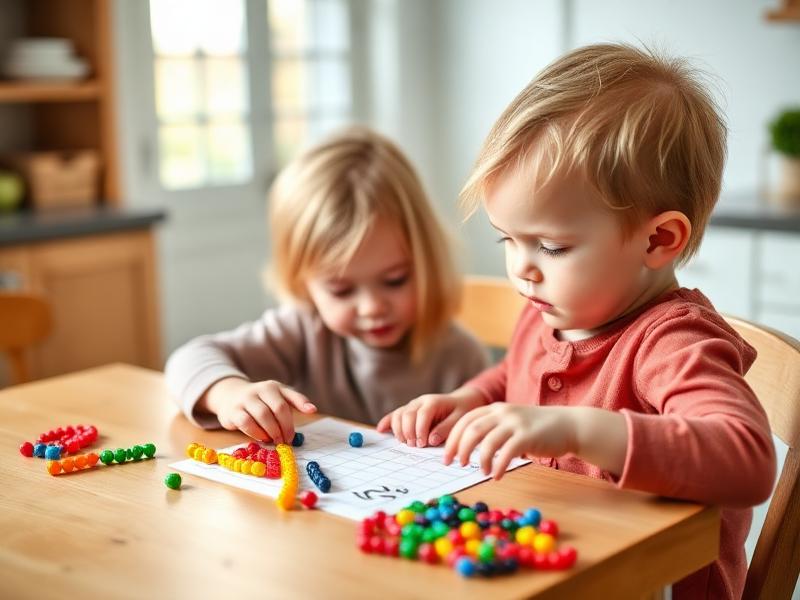
Early maths is less about counting to a hundred and more about understanding what numbers mean: that five is more than three, that a group can be split, that patterns repeat. Children build this by moving real objects around.
Everything below uses items you already own, takes under ten minutes, and can be repeated with slight variations for weeks.
Three activities for counting and one-to-one matching
Reciting numbers is not counting. Counting is touching one object per number word, and that link takes plenty of practice.
- Muffin tray drop: write numbers in each cup, drop that many buttons in.
- Cutlery matching: one fork per plate around the table.
- Stair counting: one number per step, up and down, every day.
Three pattern and sorting activities
Patterns are the foundation of algebra, and children spot them long before they can name them. Start a pattern and stop — the invitation to continue it is the whole activity.
- Pasta necklaces with a repeating two-colour or three-colour sequence.
- Sort the button jar by colour, then by size, then by number of holes.
- Cutlery drawer sorting after the dishwasher, narrated out loud.
Two comparison and measurement activities
Comparing quantities — more, fewer, heavier, longer — is what makes numbers useful. Use words consistently and let your child be the one who decides.
- Balance scales made from a coat hanger and two cups.
- Measure family members with a length of string and compare the strings.
Two number games with a pack of cards
A deck of cards with the picture cards removed is one of the best maths resources available, and it fits in a pocket.
- War/Snap: each player turns a card, highest number wins the pair.
- Make ten: find two cards that add to ten, race against a timer.
How to help without creating maths anxiety
Avoid saying 'I was never good at maths' in front of your child — attitudes travel quickly. Praise the strategy rather than the speed, and treat a wrong answer as information rather than a failure: 'show me how you worked that out'.
Keep sessions to ten minutes and stop while your child still wants to continue. Enthusiasm is the resource you are protecting.
Activity details
- Recommended age
- 3-7 years
- Participants
- 1-3 children
- Preparation time
- 3 minutes
- Activity duration
- 10 minutes per activity
- Difficulty
- Easy
Materials needed
- A muffin tray and a jar of buttons or dried pasta
- A deck of playing cards with picture cards removed
- String, a coat hanger and two paper cups
- Paper and a marker pen
Step-by-step instructions
- Choose one activity and set out only the materials it needs.
- Demonstrate once, slowly, without commentary.
- Hand over completely and let your child repeat it as often as they want.
- Ask one open question at the end: 'how did you decide?'
- Stop after about ten minutes, while interest is still high.
Safety notes
- Buttons and small pasta are choking hazards — not suitable for children under three or any child who still mouths objects.
- Supervise use of string and keep lengths short.
Learning benefits
- One-to-one correspondence and counting accuracy
- Pattern recognition and sorting logic
- Comparison language: more, fewer, longer, heavier
- Confidence with numbers before formal schooling
Alternative versions
- Increase the number range for older children and add simple addition.
- Turn any activity into a two-minute timed challenge for school-age children.
- Use outdoor objects — stones, leaves, sticks — for the same activities in the garden.
Key takeaways
- Number sense is built by handling objects, not by writing symbols.
- Start a pattern and stop; the invitation is the activity.
- A deck of cards is the cheapest maths resource you can own.
- Praise strategy, never speed, and never announce that you are bad at maths.
Frequently asked questions
At what age should a child start maths activities?
Counting, sorting and comparing start naturally around age two to three through play. Formal written work is a school-age task; before that, keep everything physical.
My child counts to twenty but cannot count six objects. Is that normal?
Reciting the number sequence and counting objects are two different skills, and the second takes longer to develop. Plenty of one-object-per-word practice is what helps. If you have concerns, your child's teacher is the best first conversation.
Are maths apps useful?
As practice for facts a child already understands, yes. They are a poor substitute for handling physical quantities in the early years.
Conclusion
Ten minutes at the kitchen table with buttons and a muffin tray will do more for early number sense than a workbook, because your child is doing the thinking with their hands.
Pick one activity, keep the materials in a jar on the table, and repeat it daily this week.
Keep reading on the Hub
- Learning Through Play: A Practical Guide for Parents
- Best STEM Toys for 5-Year-Olds: What to Look For
- Family Board Games That Teach Turn-Taking (Ages 4-10)
References and further reading
- National Council of Teachers of Mathematics — early childhood maths
- NAEYC — early maths in everyday life
This article is general educational content about play, learning and family life. It does not diagnose medical, psychological or developmental conditions and is not a substitute for advice from a qualified professional. If you have concerns about your child, please speak with your doctor, paediatrician or your child's teacher.
Related articles
Learning Through Play: A Practical Guide for Parents
Play is not a break from learning; for young children it is the mechanism of it. Here is how to support it without taking it over.
10 min read · Ages 2-8 years
Best STEM Toys for 5-Year-Olds: What to Look For
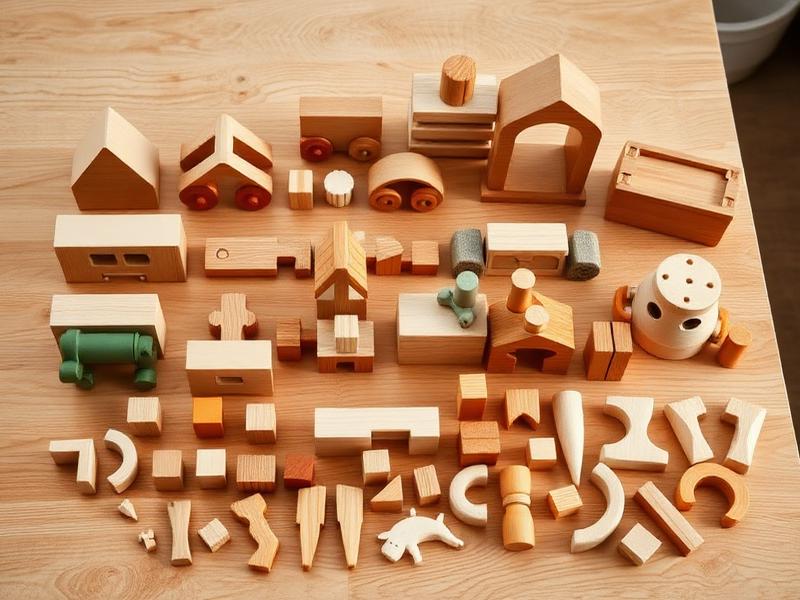
Most toys labelled STEM are ordinary toys with a sticker. Here are the four categories that genuinely earn the shelf space, and how to compare them.
9 min read · Ages 4-7 years
Family Board Games That Teach Turn-Taking (Ages 4-10)
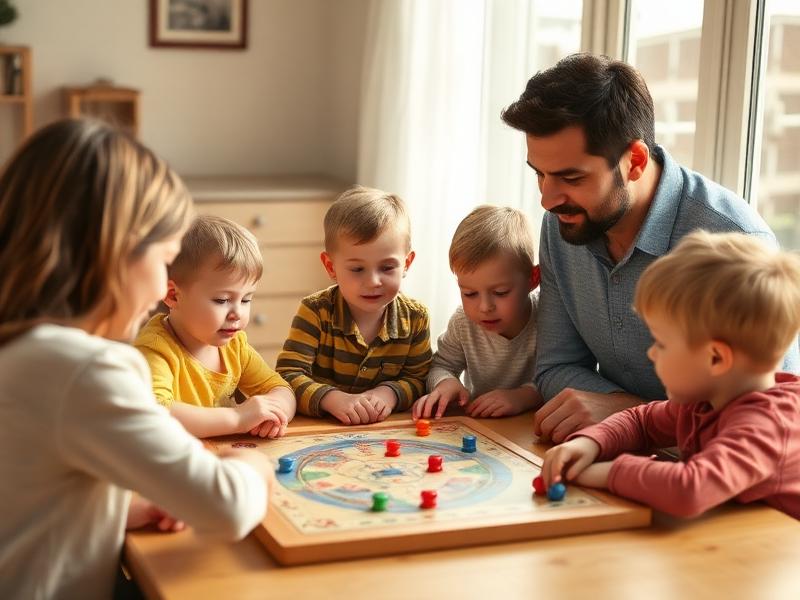
The mechanics that make a board game good for a four-year-old are different from the ones that make it fun for a ten-year-old. Here is how to tell them apart.
8 min read · Ages 4-10 years