Learning Through Play: A Practical Guide for Parents
Play is not a break from learning; for young children it is the mechanism of it. Here is how to support it without taking it over.
Kids & Parenting Hub Editorial Team
Published 13 Aug 2026 · Updated 19 Aug 2026 · 10 min read · Ages 2-8 years
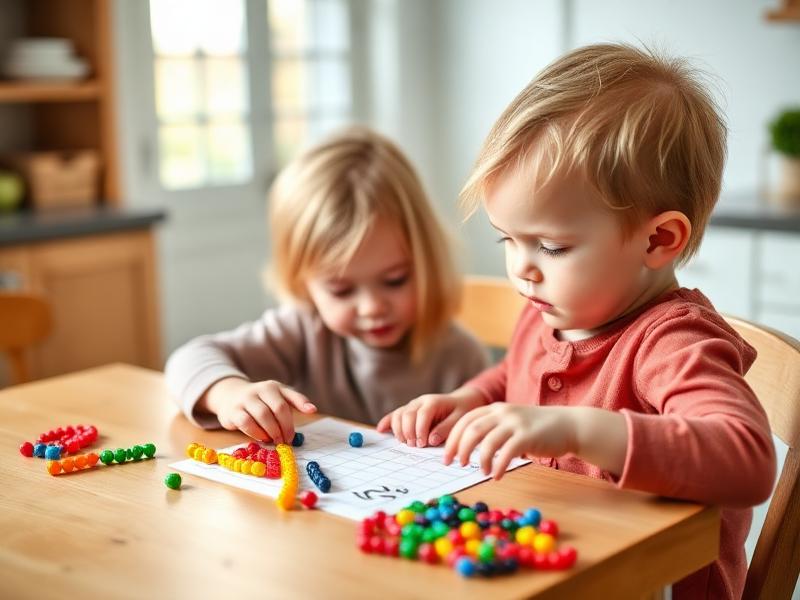
'Learning through play' has become a phrase used to sell things, which is a pity, because the underlying idea is simple and free. Children build understanding by doing, repeating, testing and talking, and play is the format in which they will do all four voluntarily.
This guide covers what the term means in practice, the kinds of play worth protecting time for, and the small adult behaviours that make the difference between supporting play and hijacking it.
What learning through play actually means
Play-based learning is not a worksheet with a cartoon on it. It has three features: the child has real choice, the activity has no single correct outcome, and the child is actively doing rather than watching.
A child stacking blocks is testing balance, gravity, sequence and spatial reasoning. Nobody has to label any of that for the learning to happen — but describing it out loud adds vocabulary, which is where the adult contribution comes in.
Five types of play worth protecting
Children need a mix. If one type dominates for weeks, deliberately set up the others rather than waiting for them to appear.
Physical play
Running, climbing, balancing — builds coordination and body awareness.
Constructive play
Blocks, junk modelling, sand — builds planning and spatial reasoning.
Pretend play
Shops, doctors, superheroes — builds language, empathy and narrative.
Games with rules
Board games, tag — builds turn-taking and self-control.
Exploratory play
Water, mud, mixing, taking things apart — builds early scientific thinking.
The adult's role: three moves that work
The most common mistake is enthusiasm. An adult who joins in and starts directing turns play into instruction, and the child's engagement drops immediately.
- Narrate rather than question: 'you've made the tower lean' beats 'what colour is that?'
- Add one thing, not five: a single new material can restart stalled play.
- Wait longer than feels comfortable before helping — struggle is the part where learning happens.
Turning everyday moments into learning
You do not need a dedicated activity slot. Cooking is measurement, the supermarket is counting and categorisation, a walk is observation and vocabulary, and laundry is sorting by colour, size and pairs.
- Cooking: counting, fractions, sequences, following instructions.
- Shopping: money, estimation, lists, categories.
- Walking: naming, spotting patterns, remembering routes.
- Tidying: sorting, matching, spatial planning.
Where screens fit
Some screen use is genuinely interactive and some is simply consumption. The practical test is whether your child is making decisions and could explain what they did afterwards. Co-viewing and talking about content raises the value of any screen time considerably.
For age-specific media guidance, health authorities such as the American Academy of Pediatrics publish family media plans that are worth reading rather than guessing.
When to seek professional guidance
Children develop at very different rates and comparison between siblings is rarely useful. If you have a concern about your child's speech, movement, hearing, vision or learning, speak with your paediatrician, family doctor, health visitor or your child's teacher. This article is general educational information and does not diagnose or replace professional advice.
Key takeaways
- Real choice, no single correct outcome, active doing — that is play-based learning.
- Protect time for all five play types rather than the one your child defaults to.
- Narrate more, question less, and wait before rescuing.
- Everyday tasks already contain most of the early maths and language children need.
Frequently asked questions
Does learning through play work for school-age children too?
Yes, though the format changes: projects, games, building, experiments and hobbies do the same job for a nine-year-old that blocks do for a three-year-old.
How long should play sessions last?
As long as your child sustains it. Uninterrupted stretches matter more than total time — a protected forty minutes is worth more than four scattered ten-minute blocks.
Do I need educational toys for this?
No. Open-ended materials — blocks, boxes, water, fabric, paper — support more play types than most toys marketed as educational.
Conclusion
Supporting learning through play is mostly a discipline of restraint: protect the time, supply open-ended materials, describe what you see, and resist the urge to run it.
Choose one everyday routine this week and narrate it out loud with your child.
Keep reading on the Hub
- 10 Early Maths Activities You Can Do at the Kitchen Table
- 12 Low-Mess Sensory Bin Ideas for Rainy Days
- How Play Builds Emotional Skills in Early Childhood
References and further reading
- NAEYC — the power of playful learning
- Center on the Developing Child, Harvard University
- HealthyChildren.org (American Academy of Pediatrics) — family media plan
This article is general educational content about play, learning and family life. It does not diagnose medical, psychological or developmental conditions and is not a substitute for advice from a qualified professional. If you have concerns about your child, please speak with your doctor, paediatrician or your child's teacher.
Related articles
10 Early Maths Activities You Can Do at the Kitchen Table
Number sense is built by handling quantities, not by filling in boxes. Ten activities using what is already in your kitchen.
9 min read · Ages 3-7 years

12 Low-Mess Sensory Bin Ideas for Rainy Days
Sensory play does not have to end in a mopped floor. Twelve bins built from things already in your kitchen cupboard, with ages and cleanup ratings.
10 min read · Ages 2-6 years
How Play Builds Emotional Skills in Early Childhood
Pretend play is where children rehearse feelings they cannot yet manage in real life. Here is what is happening, and how to stay out of the way usefully.
9 min read · Ages 2-8 years