Best STEM Toys for 5-Year-Olds: What to Look For
Most toys labelled STEM are ordinary toys with a sticker. Here are the four categories that genuinely earn the shelf space, and how to compare them.
Kids & Parenting Hub Editorial Team
Published 8 Aug 2026 · Updated 18 Aug 2026 · 9 min read · Ages 4-7 years
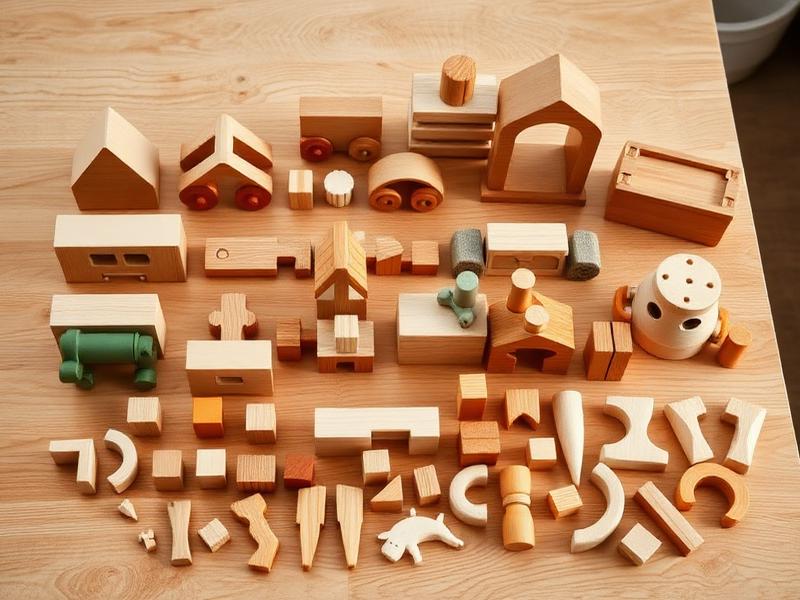
The word STEM on a box is a marketing decision, not a specification. A five-year-old learns engineering from anything they can build, rebuild and knock down — and learns very little from a toy that performs a single trick.
This guide sets out the four categories worth owning, the questions to ask before buying, and an honest comparison of what each type actually delivers.
The four categories worth owning
Nearly every worthwhile STEM toy for this age falls into one of four groups. Owning one good example of each beats owning six variations of one.
Construction sets
Blocks, magnetic tiles, interlocking bricks. Highest play value per pound, and they last from three to eleven.
Simple machines and marble runs
Teach cause and effect, gravity and iteration. Look for sets that can be rebuilt in more than one configuration.
Science and observation kits
Magnifying glasses, magnets, bug viewers, scales. Cheap, durable and endlessly reusable, unlike single-use experiment kits.
Early coding and logic games
Screen-free sequencing games and puzzle boards that teach the idea of instructions in order.
How the categories compare
Judge a toy on four things: how many ways it can be used, how long it survives, whether an adult is required, and whether a child returns to it a month later.
- Construction sets — open-endedness: very high; longevity: very high; adult help: minimal.
- Marble runs — open-endedness: high; longevity: high; adult help: some at first.
- Science kits (tools, not one-off experiments) — open-endedness: medium; longevity: high; adult help: some.
- Single-use experiment boxes — open-endedness: low; longevity: one afternoon; adult help: heavy.
Five questions to ask before buying
Ask these in the shop, in that order. Most toys fail on the first two.
- Can it be used in more than three ways?
- Who does the thinking — the child or the toy?
- Will it still work if a piece is lost?
- Does it need batteries, an app, or a subscription?
- Will it still suit my child in two years?
Pros and cons of electronic STEM toys
Electronic and app-linked toys are not automatically worse, but the trade-offs are real and worth deciding on deliberately.
Pros
Immediate feedback, structured progression, can hold attention when an adult is unavailable.
Cons
Fixed outcomes, battery and app dependence, shorter useful lifespan, often more expensive per hour of play.
Safety and age labelling
Age labels on toys are safety information first and ability guidance second. A '3+' label usually means the parts are too small for younger children, and small magnets and button batteries deserve particular care — both are serious hazards if swallowed. Consumer safety agencies publish current guidance and recall lists worth checking before a big purchase.
Key takeaways
- One good example from each of the four categories beats a shelf of variations.
- If the toy does the thinking, the child is not doing it.
- Reusable science tools outlast single-use experiment boxes many times over.
- Treat age labels as safety information, especially around magnets and button batteries.
Frequently asked questions
Are expensive STEM toys better?
Rarely in proportion to price. A large set of plain wooden blocks typically delivers more hours of engineering play than a costly branded kit.
How many toys should a five-year-old have available?
Fewer than most homes contain. Rotating a smaller selection generally increases the depth of play; boxes stored away for a month come back feeling new.
Do screen-free coding toys work?
They teach sequencing and debugging as ideas, which transfers well later. They are a reasonable first step before any screen-based coding.
Conclusion
Buy for open-endedness and durability, ignore the label, and let your five-year-old do the engineering. That single rule will save you a lot of money.
Before your next toy purchase, run it through the five questions above.
Keep reading on the Hub
- Open-Ended Building Toys Compared: Blocks vs Bricks vs Tiles
- Learning Through Play: A Practical Guide for Parents
- 10 Early Maths Activities You Can Do at the Kitchen Table
References and further reading
- U.S. Consumer Product Safety Commission — toy safety and recalls
- NAEYC — choosing materials for young children
This article is general educational content about play, learning and family life. It does not diagnose medical, psychological or developmental conditions and is not a substitute for advice from a qualified professional. If you have concerns about your child, please speak with your doctor, paediatrician or your child's teacher.
Related articles
Open-Ended Building Toys Compared: Blocks vs Bricks vs Tiles
Three building systems, three very different play patterns. Which to buy first depends less on your child's age than on how they already play.
8 min read · Ages 2-11 years

Learning Through Play: A Practical Guide for Parents
Play is not a break from learning; for young children it is the mechanism of it. Here is how to support it without taking it over.
10 min read · Ages 2-8 years
10 Early Maths Activities You Can Do at the Kitchen Table
Number sense is built by handling quantities, not by filling in boxes. Ten activities using what is already in your kitchen.
9 min read · Ages 3-7 years