Open-Ended Building Toys Compared: Blocks vs Bricks vs Tiles
Three building systems, three very different play patterns. Which to buy first depends less on your child's age than on how they already play.
Kids & Parenting Hub Editorial Team
Published 26 Jul 2026 · Updated 14 Aug 2026 · 8 min read · Ages 2-11 years
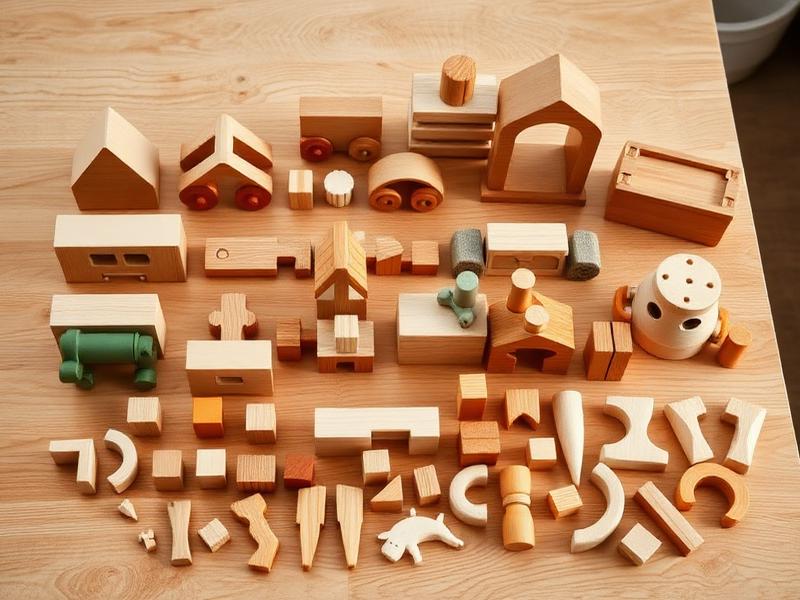
Building toys are the most reliable purchase in children's play, but the three main systems are not interchangeable. Each one produces a different kind of building, and a child who loves one may be indifferent to another.
Below is a straight comparison, followed by a recommendation depending on what your child already does with their hands.
Plain wooden blocks
Unit blocks are the oldest and, hour for hour, still the strongest. Because nothing clips together, every structure depends on balance — which makes the physics visible and the failures instructive.
They suit the widest age range of the three: a two-year-old stacks them, an eight-year-old builds a city with them, and they survive both.
- Best age range: 1.5-9 years
- Strengths: balance, spatial reasoning, durability, no lost-piece problem
- Weaknesses: structures collapse easily; storage is bulky and heavy
Interlocking plastic bricks
Bricks lock, which means a child can build something that survives being carried to show someone. That single property changes the play: models persist, get modified and become part of ongoing pretend games.
The trade-off is fiddliness for small hands, and the instruction-set habit — a child who only ever follows the booklet is doing assembly rather than design.
- Best age range: 4-11 years (large-format versions from 1.5)
- Strengths: durable models, fine motor precision, huge scope
- Weaknesses: small parts, lost pieces, instruction dependence, cost per piece
Magnetic tiles
Magnetic tiles are the fastest route from idea to structure, which makes them excellent for younger builders and for children who lose patience with collapse. They move naturally from flat patterns into three-dimensional shapes.
They are the most expensive per piece, and quality varies widely between brands — magnet strength and seam construction are what to inspect.
- Best age range: 3-8 years
- Strengths: instant success, 2D to 3D transition, light to store
- Weaknesses: expensive, magnets are a serious hazard if a tile breaks open, smaller building scope than bricks
Which should you buy first?
Match the system to how your child already plays rather than to their birthday.
- Under four, or a child who likes knocking things down: wooden blocks.
- A child who wants to keep and show what they made: interlocking bricks.
- A child who gets frustrated when towers fall: magnetic tiles.
- Limited budget and one purchase only: a large set of plain wooden blocks.
Getting more play out of what you already own
Quantity matters more than variety. A child with two hundred of one thing builds more ambitiously than a child with fifty each of four things, so top up an existing system before starting a new one.
Adding a non-building material — toy animals, fabric, cardboard tubes, small vehicles — reliably restarts stalled building play without any new purchase.
Safety notes
Small parts are a choking hazard for children under three, and loose high-powered magnets are dangerous if swallowed — check tiles regularly for cracked seams and remove any damaged piece immediately. Check current recall notices from your national consumer safety agency before buying second-hand.
Key takeaways
- Wooden blocks have the widest age range and the lowest cost per hour.
- Bricks suit children who want models that survive; tiles suit children who want instant results.
- Quantity of one system beats variety across several.
- Inspect magnetic tiles for cracked seams; loose magnets are a serious hazard.
Frequently asked questions
Are wooden toys always better than plastic?
Not automatically. Wood is durable and pleasant to handle; good plastic systems offer precision and scope that wood cannot. Judge each toy on openness and durability rather than material.
Is second-hand safe?
Often, and it is much cheaper. Check for cracks, splinters, missing safety labels and current recall notices, and wash everything before use.
How many pieces is enough?
For a first serious set, aim for enough that two children can build side by side without negotiating over every piece — typically a hundred or more.
Conclusion
Pick the system that matches how your child already plays, buy enough of it, and top it up rather than diversifying. That is the whole strategy.
Count what you already own before buying — most families need quantity, not another system.
Keep reading on the Hub
- Best STEM Toys for 5-Year-Olds: What to Look For
- Learning Through Play: A Practical Guide for Parents
- 12 Low-Mess Sensory Bin Ideas for Rainy Days
References and further reading
- U.S. Consumer Product Safety Commission — magnet and small-part safety
- NAEYC — block play and learning
This article is general educational content about play, learning and family life. It does not diagnose medical, psychological or developmental conditions and is not a substitute for advice from a qualified professional. If you have concerns about your child, please speak with your doctor, paediatrician or your child's teacher.
Related articles
Best STEM Toys for 5-Year-Olds: What to Look For
Most toys labelled STEM are ordinary toys with a sticker. Here are the four categories that genuinely earn the shelf space, and how to compare them.
9 min read · Ages 4-7 years
Learning Through Play: A Practical Guide for Parents
Play is not a break from learning; for young children it is the mechanism of it. Here is how to support it without taking it over.
10 min read · Ages 2-8 years

12 Low-Mess Sensory Bin Ideas for Rainy Days
Sensory play does not have to end in a mopped floor. Twelve bins built from things already in your kitchen cupboard, with ages and cleanup ratings.
10 min read · Ages 2-6 years